We stopped asking teachers "how did it go?"
Good coaching is the highest-leverage thing that can happen in a classroom — and the rarest. Most teachers on Earth are observed once every few years, if ever. So we gave every teacher a coach in their pocket. The hard part wasn't the listening. It was the asking.
LIVE IN PRODUCTION · PK · TZA great coach never asks a question you can answer on autopilot. For months, ours did. It listened to a recording of a teacher's lesson and then asked the safe, generic things — How did the lesson go? What would you change next time? — questions a teacher learns to pattern-match by her third session.
The answers showed it. They were getting shorter. The share of teachers who walked away with a concrete "next time I will…" plan was sliding. A coach that asks forgettable questions gets forgettable answers — at any scale.
So in May 2026 we rebuilt the question engine from the ground up, around a single rule: never ask a question the teacher could have answered without having taught that exact lesson.
A generic question gets a generic answer. We wanted the AI to put the teacher back inside the one minute of her lesson that actually mattered.— Design principle · Coaching v12
The same 30 seconds, asked three different ways
Ehtisham's maths lesson, 20 May. The AI noticed a contradiction in his own teaching: at 05:00 the children were counting on their fingers — discovering it themselves. By 11:20 he'd handed them a rule: "always start from the unit." Asked to write a reflective question about that turn, the engine wrote three genuinely different ones. Each arrives as a WhatsApp voice note, in Urdu.
All three cite the real timestamps from her lesson, surface the same teaching moment, and contain no advice and no judgement. But they read like three different thoughtful coaches. Variation C even invents a student's voice — something a fill-in-the-blank template categorically cannot do.
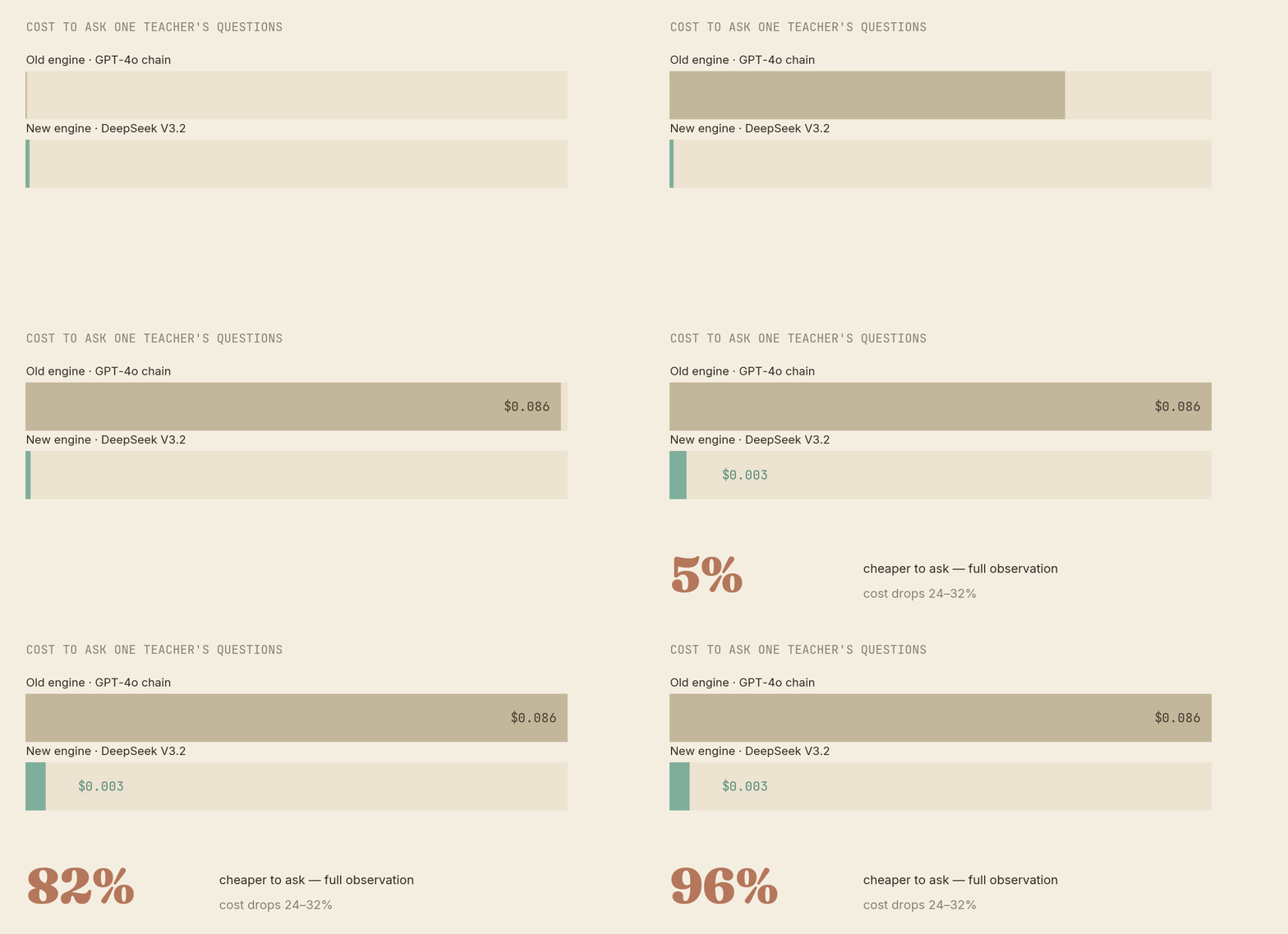
Better questions, for a fraction of the cost
It folds the lesson analysis and the questions into one cheaper, better model.
How the AI finds the moment
It reads the whole transcript looking for a contradiction — two moments where the teaching changed. That tension becomes the question.

What happens after the recording
The rules a question must survive
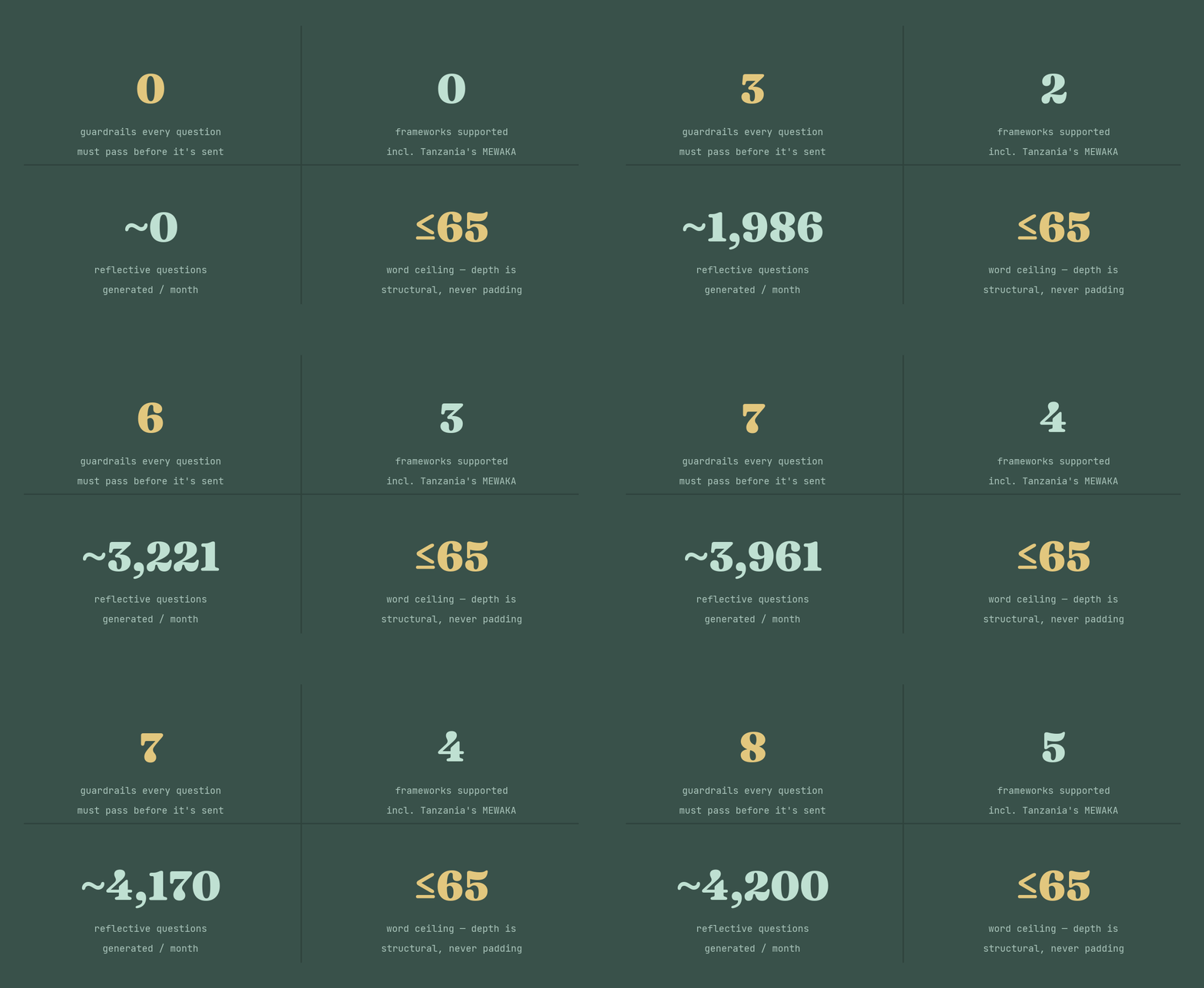
Eight checks run automatically after each question is written. Fail one, and it's rewritten — up to three times — before a teacher ever sees it.
The question is a voice note now — and it speaks Arabic without being taught.
Reflective questions arrive as native WhatsApp voice notes, in the teacher's own language. And because the language layer runs on principles rather than hard-coded rules, when we pointed it at a real Arabic lesson with no Arabic-specific code, it wrote natural, gender-neutral Arabic — switching to English for the subject terms — on the first try.
LIVE in production · May 2026